There are something like 60,000 plugins in the WordPress directory, and every WooCommerce "best plugins" list seems to recycle the same twenty affiliate links. This one is different in two ways: it's organized by what your store actually needs — product management, orders, shipping, speed, security — and it includes the tools we build ourselves, clearly labeled, next to third-party plugins we genuinely recommend and use.
Full disclosure up front: N-Media builds WooCommerce plugins (four entries below are ours, marked "by N-Media"). We've also been running WooCommerce stores and building for them since 2010, so the third-party picks come from real use, not a commission table.
For: product management at any scale. Managing products one edit screen at a time stops working somewhere around fifty products. Bulk Product Sync connects your store to Google Sheets: fetch your catalog into a spreadsheet, edit prices, stock, attributes, and descriptions with formulas and fill-downs, then sync back — with a per-row sync_status so you know exactly what happened to every product. The new BPS Cloud version installs nothing on your WordPress site and can even draft AI product descriptions right in the sheet.

The whole workflow lives in a Google Sheets menu — no CSV exports, no separate app.
Free on the Google Workspace Marketplace; the classic WordPress plugin is also available.
For: real-carrier shipping without the spreadsheet math. PluginHive has been the name in WooCommerce shipping for years, and this plugin is why: live rates from major carriers (UPS, USPS, FedEx, DHL, Australia Post and more) at checkout, one-click label printing, and order tracking handled inside the WooCommerce dashboard instead of a separate carrier portal. If you ship physical products and you're still calculating rates by zone tables, this is the upgrade that pays for itself in support tickets you never get.
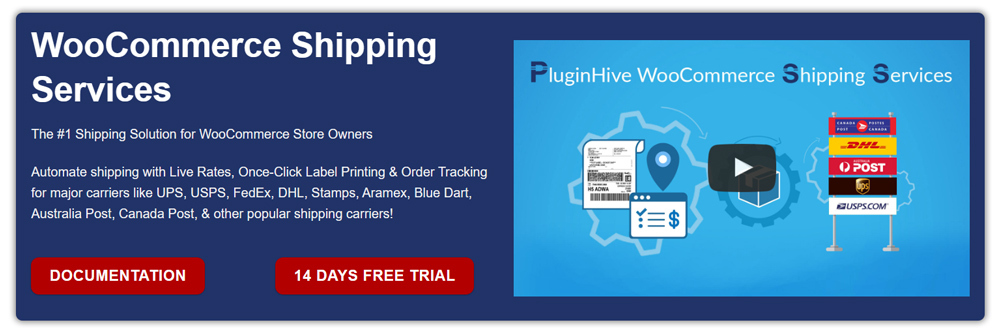
Live rates, labels, and tracking for all the major carriers, inside WooCommerce.
pluginhive.com/woocommerce-shipping-services (14-day free trial)
For: talking to customers about their orders. Once an order exists, email threads get lost and support tickets feel bureaucratic. OrderConvo attaches a conversation directly to each order — customers and admins exchange messages and files right on the order page. It's the difference between "please quote your order number" and just… talking. Especially strong for stores doing custom or personalized work, where every order needs a proof, a file, or a question answered.
For: not getting hacked. WooCommerce stores hold customer data and take payments, which makes them targets. Wordfence's firewall and malware scanner are the de-facto standard: login protection, live traffic view, and scan results that actually tell you what to fix. The free tier is genuinely useful; premium gets you real-time firewall rules.
wordpress.org/plugins/wordfence
For: page speed you can feel. Slow stores lose carts — Google's data says most mobile visitors abandon pages that take over three seconds. WP Rocket is the caching plugin we recommend because it's the one non-developers configure correctly: sensible defaults, page caching, lazy loading, and database cleanup, with WooCommerce-aware cart/checkout exclusions out of the box.
wp-rocket.me (paid)
For: being found. Product pages need structured data, sitemaps, and clean metadata to rank — Rank Math handles all three, and its WooCommerce module adds product schema (price, availability, reviews) that makes your listings eligible for rich results. The free version covers more than most stores will ever use.
wordpress.org/plugins/seo-by-rank-math
For: stores that exchange files with customers. Print shops, design services, document-based businesses — anywhere a customer needs to send you files or fetch theirs. Each user gets a private, secure file area on the front-end: uploads, folders, role-based access, and sharing via protected links, with the admin seeing everything. Files are served through a secure download route, never as raw public URLs.
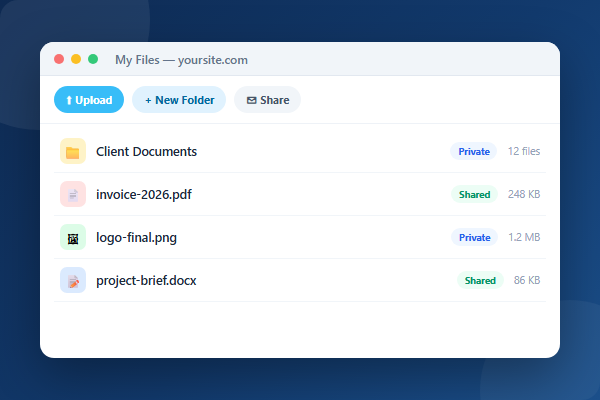
Every user gets their own file area — private folders, sharing, and admin oversight.
For: recovering revenue you already earned. Abandoned-cart emails, post-purchase follow-ups, and audience sync — connected directly to your store's order data. Whatever email platform you prefer, the principle stands: a store without automated cart-recovery email is leaving 5–10% of revenue on the table, and this is the lowest-friction way to switch it on.
wordpress.org/plugins/mailchimp-for-woocommerce
For: login screens that match your brand. The default WordPress login is the most-seen unbranded page on any membership or wholesale store. Simple WP Login replaces it with ready-made, designed login screens — your logo, your colors, no CSS wrestling — so the first thing returning customers and wholesale buyers see looks like your store, not like WordPress.
For: taking money with the least friction. Stripe's official gateway supports cards, Apple Pay, Google Pay, and local payment methods with a checkout that doesn't bounce customers to another site. Pair it with your regional gateway where needed, but as the international default it's the one we see cause the fewest failed-payment support threads.
wordpress.org/plugins/woocommerce-gateway-stripe
Every plugin you add is code you maintain, so the bar should be "solves a problem I actually have this quarter." A sane loadout for most stores: one product-management tool, one shipping tool if you ship, security, caching, SEO, email — and then the plugins specific to how your store works, like order messaging or file uploads. Skip anything that duplicates a feature your theme already has, and be suspicious of plugins that haven't seen an update in a year.
Start with the biggest time-saver
Bulk-edit your whole catalog from Google Sheets — free to install, nothing added to your WordPress site.
Get BPS Cloud on the Google Workspace Marketplace →workspace.google.com/marketplace — Bulk Product Sync with Google Sheets